Drums with click and in-ears: starting without the tempo drifting
How a worship drummer moves to click and in-ears: in phases, what the drummer's mix needs, how to start each song, and when to let the click go.
In this article8 sections
Short answer: bring the click in in phases: first only the drummer hears it on one earpiece and the band follows as always; then the bassist joins; and finally the whole band, with tracks if you use them. The drummer’s in-ear mix has the click clear but not loud, the bass and the leader’s vocal above the rest, and some of their own kick and snare. Every song starts with a two-bar count-in, and where the click drops out is agreed in advance.
A tempo that rushes in the chorus and drags in the bridge is one of the most common problems in a worship band, and one of the most tiring for a congregation. A click fixes it, but brought in badly it creates new problems: lost musicians, stiff-sounding bands and a drummer playing to the earpiece instead of the room. This guide is about doing it well from behind the kit.
Why does the click start with the drums?
Because the room follows the drums. If the drummer is in time, the band is in time even if nobody else hears the click. That’s why the gentlest start doesn’t require changing anyone’s monitoring: one earpiece for the drummer, and the rest of the band carries on as usual.
The drummer is also the one who practices with a metronome most outside church. Asking them to use it on Sunday is a small step; asking a keys player who has never played to a click is a big one.
How do you bring it in by phases?
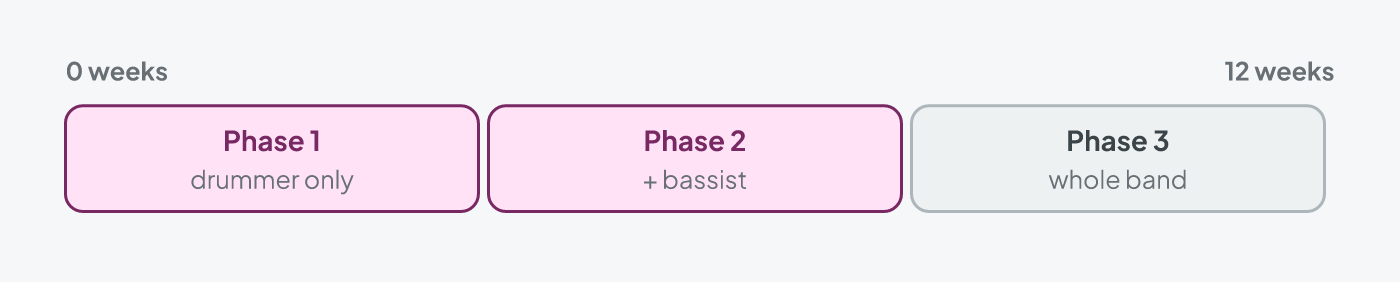
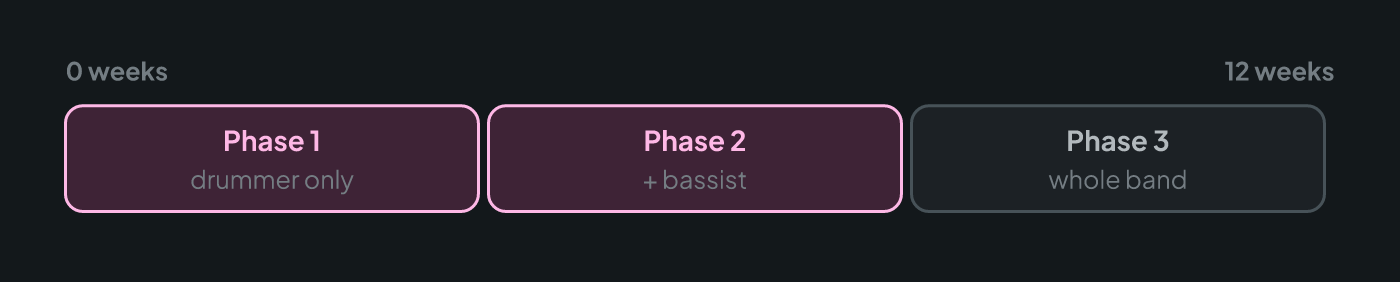
- Drummer only. Click in one earpiece, at the agreed tempos. Nobody else notices the change except that the tempo stops moving.
- Bassist joins. The rhythm section shares one clock and the band’s floor stays put.
- Whole band. In-ears for everyone, plus tracks or pads if the team uses them. This phase asks the most of the engineer and the monitoring.
You don’t have to reach phase three. Plenty of teams stay at phase two for good, and it works very well for them.
How do you set up the click on stage?
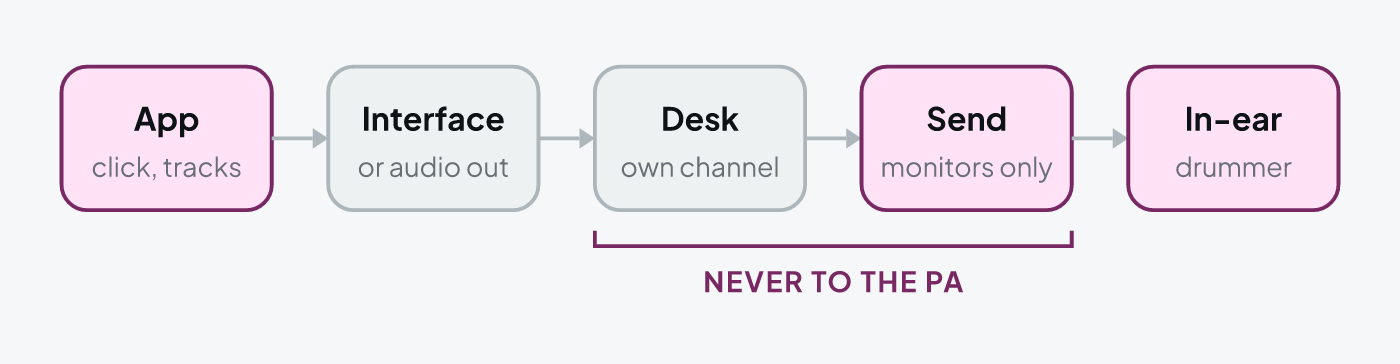
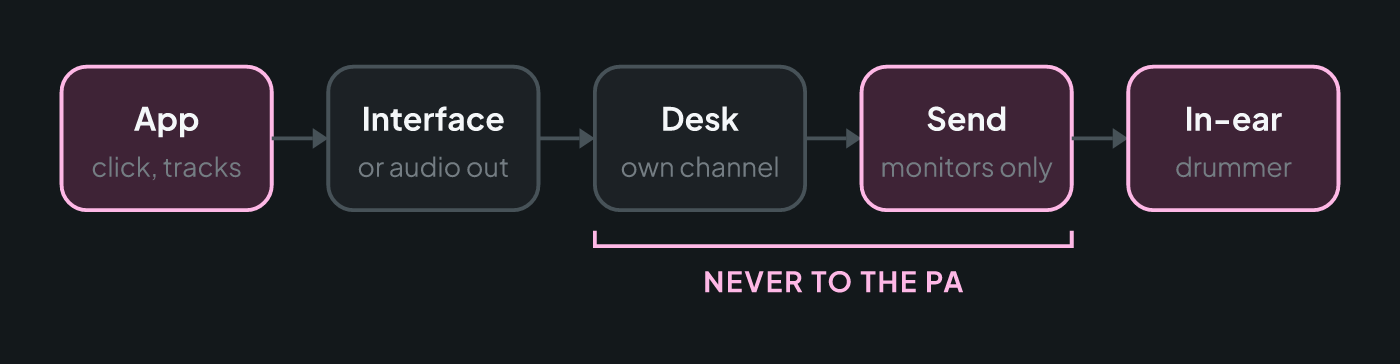
- The source: a metronome app on a phone is fine for phase 1. For tracks, a dedicated app (Playback, Prime, Ableton Live…) on a laptop or tablet.
- The path: simplest is an earpiece plugged straight into the source. Cleanest is sending it to the desk on its own channel and from there only to the monitor sends of whoever needs it.
- The rule: the click channel never goes to the PA. Lock or label it on the desk so nobody pushes it up by mistake.
What does the drummer need in their in-ears?
| Source | Level | Why |
|---|---|---|
| Click | Clear, not blaring | Too loud is tiring and forces everything else up |
| Bass | Above the rest | It’s the other half of the section |
| Leader’s vocal | Above the rest | They change the structure live |
| Own kick and snare | Some | Sealed in-ears lose the feel of the kit |
| Keys, guitars, other vocals | Just enough | A harmonic reference, not the focus |
| Ambience (room mic) | A little | To hear the congregation and not play in isolation |
With an electronic drum kit, the whole kit runs through the mix, and the drummer needs a lot more of their own sound than with an acoustic one.
How does each song start?
- Written tempo for every song in the repertoire, in bpm. “Fast” isn’t a tempo.
- A two-bar count-in on the click before starting. The first to listen, the second to come in.
- An in-time intro: if the song opens with solo keys or guitar, the drummer counts them in with clicked sticks or the hi-hat, so the click and the band start together.
When do you let the click go?
The click is there to serve the moment, not the other way round. Agree with the leader where it drops out:
- Spontaneous moments and open repeats, where the leader may stretch or cut.
- Ritardando endings, which sound mechanical on a click.
- Spoken transitions between songs.
What matters is that it never disappears by surprise: the drummer knows, and the band has something to hold on to.
Common mistakes when starting with a click
- Putting the whole band on it the first Sunday. Someone gets lost and the team decides the click “isn’t for us.”
- Click too loud. Fatigue and, in the long run, hearing damage.
- Tempos picked without trying them with the singer. A tempo that’s comfortable on drums can leave the congregation out of breath.
- The click in the PA. It happens more than you’d think; lock it on the desk.
- Playing to the earpiece. The click sets the tempo; the room and the leader still set everything else.
Frequently asked questions
How does a church drummer start playing with a click?
First at home and in rehearsal, with the click at a comfortable tempo and Sunday's songs. Then, in the service, only the drummer hears it on one earpiece; the rest of the band follows the drums as always. Once that works for a few weeks, the bassist joins, and finally everyone else. Moving the whole band over at once is the fastest way for someone to get lost.
What should the drummer's in-ear mix include?
The click clear but not blaring, the bass and the leader's vocal above everything else, some of their own kit (mainly kick and snare) and just enough of the rest. The leader's vocal matters because they change the structure live; the bass, because it's the other half of the section. A click that's too loud is tiring and ends up pushing everything else up.
Can you drop the click mid-song?
Yes, and it's worth agreeing on. Many teams turn it off for spontaneous moments, open repeats or when the leader wants to stretch the ending. What matters is that the drummer knows when it's coming and the band has a pulse to hold on to: if the click vanishes without warning, the tempo collapses as if it had never been there.